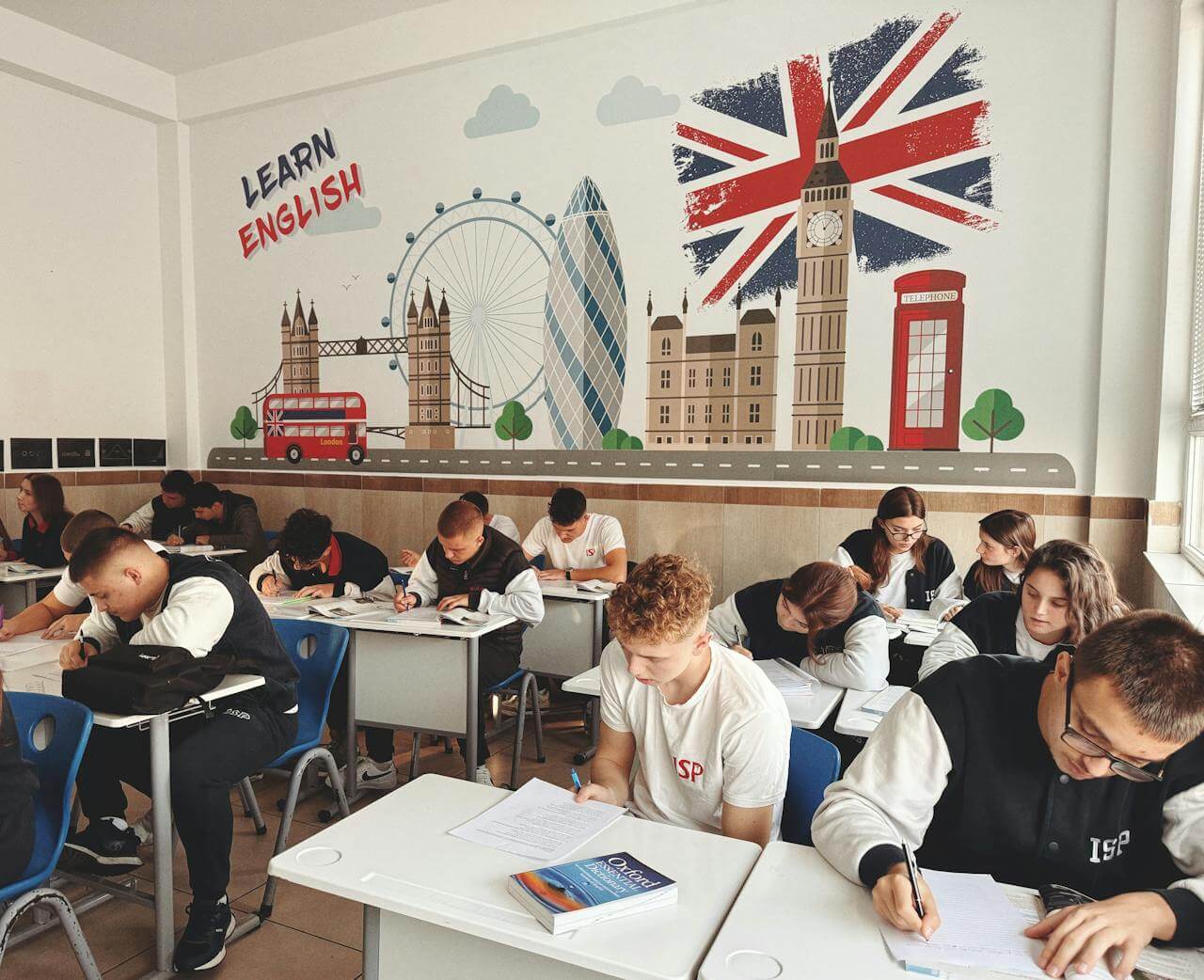
Immersion isn't a teaching method in the usual sense. It's a situation where your child has no alternative: English becomes the only way to communicate, get by and succeed academically. That's why time at a British school is the most effective way to master the language — faster than any course, app or tutor.
There's a catch, though: immersion only works under the right conditions. If your child's English is too weak, immersion becomes isolation rather than learning. If the environment is wrong, they'll end up speaking only to other international students and stop progressing. Here's how real immersion works — and how to get it right.
How immersion works: the science
When we can't fall back on our native language, the brain switches into active learning mode — not because it ought to, but because it has to. Every conversation — with classmates and teachers, in the dining hall, on the sports pitch — becomes an English lesson.
In our experience, a few months of genuine immersion at a British school can achieve more than years of classroom study. It's the same effect seen in exchange students and families who relocate: a change of environment transforms how quickly a language is learnt.
Immersion options:
which is right for you?
A British boarding school — total immersion
Boarding is the most intensive option. Immersion here is literal: your child lives in English 24/7 — lessons, meals, evening activities, late-night chats with friends. The first few weeks can be tough, but the results are the fastest and the most lasting.
Day school + host family
We don't arrange or recommend a day school with a host family. Host families aren't professionally responsible for your child and rarely provide real immersion — unless it's a teacher's family with a structured language programme.
Summer immersion programmes
Short programmes (2–8 weeks) at British universities or summer schools, combining intensive lessons with life on campus. They're a great kick-start and a taste of what to expect, but no substitute for long-term immersion — an ideal first step before committing to study in the UK.
Worth knowing: summer programmes at famous boarding schools — Eton, Harrow, Cheltenham, Marlborough — are usually run by private companies that hire the campus, not by the schools themselves. For reliable advice on providers and how programmes compare, talk to us at Alpha Capital Education — we'll help you choose a genuinely high-quality programme.
Homestay with a teacher
Your child lives with a native speaker who is a qualified English teacher, so lessons, home life and conversation all blend together. You can ask for a family with a child of the same age who doesn't speak Russian, which dramatically speeds up spoken English. It's one of the most effective options for children below B2 before starting at boarding school.
A trial term at a British school
A trial term at a British school
Spending a term at a British school before applying is a great way to test your child's readiness, get to know a particular school and make an informed decision.
Programmes for ages 5–11
Programmes for ages 5–11
For younger children, there are programmes where they attend a British school full-time while living with their parents — a gentle introduction to British education without being separated from family, and the ideal first step for little ones.
What makes immersion work?
Immersion doesn't work by itself.
These conditions make all the difference:
- A starting level of at least A2–B1. Below that, children can't understand enough to learn from what's around them. Build the basics first, then immerse.
- No safety net — if 60% of the class speak Russian, immersion simply won't happen. Choose schools with a genuinely international mix.
- Getting involved outside lessons. Clubs, sport and drama are where the informal learning happens and spoken English really takes off.
- Constructive correction. Teachers and peers need to correct mistakes, not just accept any English.
- Limiting the native language. If your child speaks only Russian or Kazakh in their free time, immersion is only partial — and progress slows.
See what British school life is really like — watch our tour of a London day school and a traditional boarding school
If moving isn't an option yet, online study can be a good first step — read our article: Studying the British curriculum online
IELTS and English requirements:
a quick guide
- Boarding school entry (Years 9–11): schools test English with their own assessments or UKiset/ISEB. IELTS isn't usually needed under 17 — it becomes a requirement for sixth form and university.
- Sixth form entry (Years 12–13): IELTS 5.5–6.5, depending on the school.
- Foundation year: IELTS 5.5–6.5, depending on the university and course.
- Undergraduate degree: IELTS 6.0–7.0; usually 6.5–7.0 for Russell Group universities.
Common myths
about immersion
"My child will pick it all up naturally"
Not quite. The environment creates the opportunity, but without active effort, progress is slow. Children who simply sit back learn far more slowly than those who seize every chance to talk.
"The younger, the better"
Partly true — young children do pick up languages faster. But under-10s in a fully English environment with no access to their own language can find it very stressful. The sweet spot for immersion at a British school is 12–14: the brain is still highly adaptable, and children are emotionally resilient enough.
"Two weeks at camp will transform their English"
Not really — two weeks bring confidence and motivation, but not lasting progress. Real, sustained improvement takes at least a year of immersion.
"Good English means you don't need immersion"
An IELTS score measures academic English. Everyday British English — its rhythm, pace, slang and cultural references — can only be learnt by living it. They're two different things.
The bottom line: immersion is incredibly powerful — but only with the right format, at the right age and with your child fully engaged. If you're considering online study as a first step before moving, read our article: Studying the British curriculum online
How to track progress
during immersion
Parents often ask how to tell whether immersion is working. Here are some practical milestones:
- After 1 month: your child understands everyday spoken English — in the dining hall, in PE, in the corridor.
- After 2–3 months: they start thinking in English in simple situations and stop translating in their head.
- After 6 months: they speak fluently in everyday conversation, and their accent begins to change.
- After 12 months: their academic English is strong enough to thrive in a British classroom.
The most objective measure is an IELTS or Cambridge English test at the end of the first year. Most students who spend a year fully immersed at a British school reach IELTS 6.5–7.5 without any special test preparation — the result of their environment, not cramming.
FAQ: English immersion in the UK
At what age does immersion make sense?
From 10–11 for summer programmes, and from 13–14 for full-time boarding. Children of this age adapt quickly to a new language.
Will my child need an English tutor alongside school?
Sometimes, in the first few months, for support with academic subjects. But over time, the environment becomes the best teacher.
Can my child prepare for IELTS online, without coming to the UK?
Yes — online IELTS preparation works. But speaking and listening improve much faster in the UK.
How do I know if my child's English is good enough for boarding school?
As a guide, IELTS 5.0+ or a solid UKiset result. Most boarding schools also test English as part of their admissions process.
Which is better for English — boarding school or a day school with a host family?
Boarding offers more intensive, well-supervised immersion. We don't recommend a day school with a host family — unless the host is a professional teacher.
How long does it take to reach university-level academic English?
With full immersion at a British school, around 12–18 months from B1 — covering not only spoken English but also academic skills: essays, argument and working with sources.
How do you help choose the right programme?
We assess your child's current English and tell you honestly which option will work; shortlist schools and programmes with a genuinely international mix — not dominated by Russian speakers; help your child prepare before departure so they arrive ready for real immersion; and track their progress through their guardian and school reports.
Not sure which option suits your child best — boarding, day school or a summer programme — given their current level and goals? Book a free consultation with Alpha Capital Education — we'll assess their English and recommend a specific programme with a realistic timeline to academic fluency